 Virginia has joined a growing number of states that have legalized the possession of small amounts of Marijuana. Once considered a bastion of hardline anti-drug law enforcement policies, the Commonwealth initially decriminalized the simple possession of Marijuana in 2020 allowing for punishment in the form of a civil fine of $25.00. The General Assembly legalized the possession of small amounts of marijuana by persons over the age of 21 years effective July 1, 2021. (Senate Bill, 1406).
There remain issues that have yet to be fully addressed. For example, although Virginia has decriminalized simple possession of marijuana, “marihuana” remains a Scheduled Controlled Substance under Federal law. This dichotomy was addressed in the realm of medical marijuana.
But what does it all mean for Virginians who choose to use marijuana? Call our Warrenton marijuana lawyers if you are looking for representation.
Individuals who are 21 years and older are allowed to possess up to one ounce of marijuana in public places. The use of marijuana is generally permitted for adults in private residences. However, it is important to note that private residences have the right to impose restrictions on marijuana usage within their premises.
Regarding cultivation, adults aged 21 and over can grow up to four plants per household for personal use, subject to specified requirements.
Furthermore, according to the Virginia Cannabis Control Authority (CCA), “adult sharing” is legal. It refers to the transfer of one ounce or less of marijuana between individuals who are 21 years or older. However, it is crucial to understand that “adult sharing” does not cover scenarios where marijuana is given alongside a reciprocal transaction, such as in cases where a gift of marijuana is offered or advertised with the purchase of goods or services.
Any person who possesses more than one ounce or equivalent marijuana product but less than four ounces is subject to a fine of $25. Possession of more than four ounces but not exceeding one pound of marijuana or an equivalent amount of marijuana products is considered a Class 3 misdemeanor for a first offense. For a second or subsequent offense, it is classified as a Class 2 misdemeanor.
If the quantity exceeds one pound or the equivalent, it is classified as a felony punishable by a jail term between one and ten years, along with a fine of up to $250,000 or both.
When it comes to marijuana plants, having more than four but less than 10 marijuana plants is subject to a fine of $250 for a first offense. Possession of more than 10 but less than 49 marijuana plants is a Class 1 misdemeanor while having more than 49 but less than 100 plants is a felony crime.
Under Virginia laws, for possession of more than 100 marijuana plants, a potential penalty can include imprisonment from one to 10 years, a fine of up to $250,000, or both.
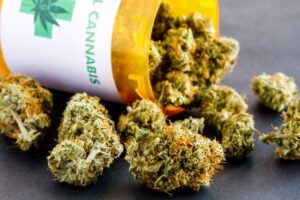 We recognize that the current legal landscape of medical marijuana law may, at best, be described as a hazy thicket. Marijuana is illegal at the federal level and has been deemed under federal law to have no medicinal purposes, but the majority of states have legalized medical marijuana and created regulatory schemes for its administration and usage.
Complicating and confusing matters further, Congress has placed budgetary restrictions on the ability of the United States Department of Justice to prosecute individuals for marijuana usage in compliance with a state medical marijuana scheme, and the Department of Justice has issued, revised, and revoked memoranda explaining its marijuana enforcement practices and priorities, leaving in place no clear guidance. (Daniel Wright’s Case, 486 Mass. 98 (2020)). Thus, although the dichotomy of medical marijuana use between state and federal level law enforcement may be in a state of détente, it is less clear how the recreational use of marijuana in Virginia will be judged against existing federal standards.
Those using marijuana recreationally should be cognizant of the continuing prohibition of driving or operating a motor vehicle while under the influence of any narcotic or self-administered intoxicant or drug of whatsoever nature, to a degree that impairs his ability to drive or operate any motor vehicle. §18.2-266 of the Code of Virginia, 1950, as amended.
No presumptive levels of marijuana in the blood system presently exist to establish intoxication, as do those for cocaine, methamphetamine, or phencyclidine. However, this does not preclude one from being charged and convicted of driving under the influence of drugs (DUID) based upon the use of marijuana.
 As one of the latest states to legalize marijuana in some capacity, Virginia is still navigating the uncharted waters of legalized cannabis.
Whilst possession can now be considered legal within the set boundaries, it’s important to know that smoking or consuming marijuana in public is a felony and remains illegal.
Speaking to an experienced attorney can be crucial for your case if you are facing a drug charge. They’ll be familiar with any law changes that could affect your case. They can also offer you advice tailored to your unique situation.
For more questions on Marijuana Laws in Warrenton, reach out to our attorneys at Ashwell & Ashwell, PLLC.

A criminal defense attorney serves as your advocate and guide throughout every stage of your legal proceedings. From the moment of arrest or charge, your attorney will explain your rights, help you understand the charges against you, and develop a legal strategy tailored to your case. They will investigate the facts, review evidence, file pretrial motions, negotiate with prosecutors for reduced charges or plea agreements, and represent you vigorously at trial if necessary. Your attorney ensures that law enforcement and the prosecution respect your constitutional rights at every turn, working to achieve the best possible outcome on your behalf.
In general, the civil litigation process encompasses several crucial stages, beginning with the Pleadings phase, where parties formally outline their claims and defenses. Following that, the Discovery stage allows both sides to gather evidence through depositions and document requests to support their case. Pre-trial motions aim to resolve the case or limit issues before trial. If unresolved, the process moves to Trial, where the case is argued in court. Finally, the Appeal phase offers a chance to challenge the trial’s outcome. Each stage is pivotal, designed to ensure fairness and resolve disputes effectively.
A DUI conviction in Virginia carries serious consequences that can affect many areas of your life. For a first offense, you may face fines starting at $250, a 12-month license suspension, mandatory enrollment in the Virginia Alcohol Safety Action Program (VASAP), and possible jail time. Subsequent offenses result in significantly harsher penalties, including longer license suspensions, higher fines, mandatory minimum jail sentences, and the possibility of felony charges. A DUI conviction also creates a permanent criminal record, which can impact your employment, insurance rates, and professional licenses. Our attorneys work aggressively to protect your rights and pursue the best possible outcome for your case.
Our family law attorneys handle a wide range of matters affecting families and individuals. We represent clients in divorce and legal separation proceedings, including both contested and uncontested cases. We also handle child custody and visitation disputes, child support and spousal support (alimony) matters, equitable distribution of marital property, and the enforcement or modification of existing court orders. Additionally, our attorneys assist with adoption proceedings, paternity actions, domestic violence protective orders, and prenuptial or postnuptial agreements. Whatever your family law matter, our team is committed to protecting your rights and the well-being of your family.
A comprehensive Virginia estate plan typically includes several key documents. A Last Will and Testament outlines how your assets will be distributed and may name a guardian for minor children. A Revocable Living Trust allows assets to pass to beneficiaries without going through probate. Financial Powers of Attorney designate someone to manage your financial affairs if you become incapacitated, while a Healthcare Power of Attorney and Advance Medical Directive (Living Will) specify your healthcare preferences and appoint someone to make medical decisions on your behalf. Beneficiary designations on life insurance policies and retirement accounts are also critical components. Our estate planning attorneys will work with you to ensure all documents are properly drafted and reflect your wishes.